5 V sensors, shields and legacy peripherals
5.0 V I/O drives 5 V logic directly — no level shifting.
Engineering inference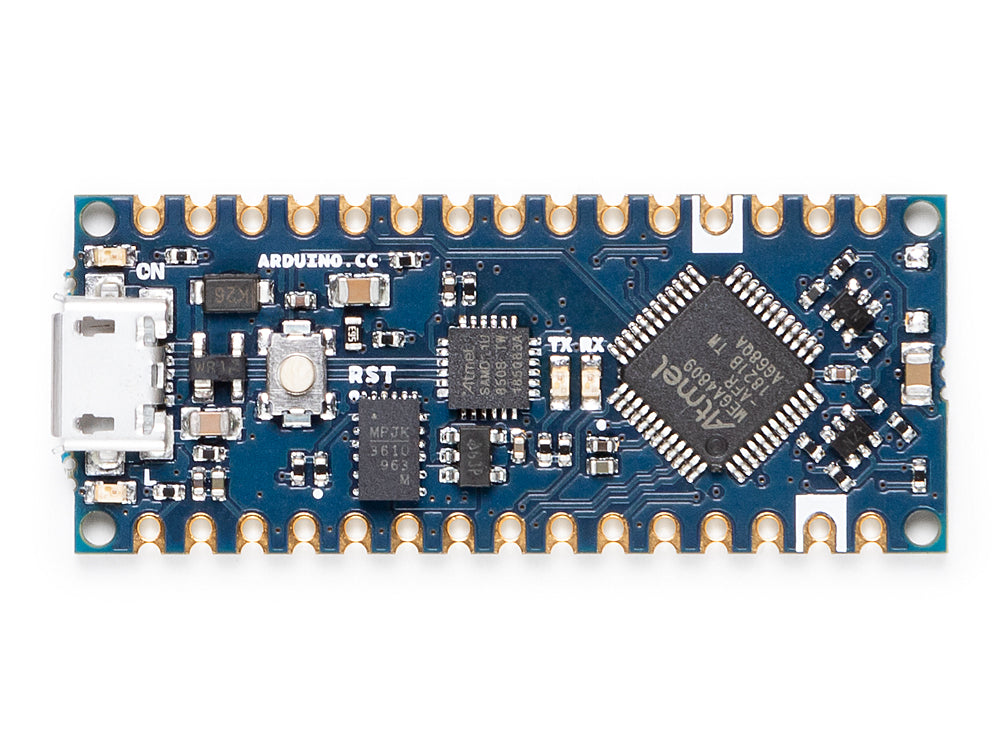
Arduino SA
5 V Nano-format board with Microchip ATmega4809 (AVR 20 MHz, 48 KB flash, 6 KB SRAM, 4 USART), SAMD11 USB-serial bridge (UPDI programming), MPM3610 buck (VIN up to 21 V), AP2112K 3.3 V LDO; drop-in 5 V replacement for the classic Nano.
ABX00028Development boardFacts about the complete product. Unknown values remain open design questions.
Guidance to help you shortlist. The basis is shown for each recommendation.
5.0 V I/O drives 5 V logic directly — no level shifting.
Engineering inferencePrograms from Arduino IDE, Arduino Cloud.
Engineering inferenceThe board is the parent product. Each chip has its own memory, pins, capabilities and thermal limits.
Microchip Technology
ff461f21-c17a-597b-80ce-b50dcbb19265--mcuMicrochip
ff461f21-c17a-597b-80ce-b50dcbb19265--u3Monolithic Power Systems
ff461f21-c17a-597b-80ce-b50dcbb19265--ic1Diodes Inc.
ff461f21-c17a-597b-80ce-b50dcbb19265--u2The Arduino Nano Every is built around the ATmega4809-AU, alongside ATSAMD11D14A, MPM3610AGQV-P, AP2112K-3.3TRG1.
22 GPIO pins are exposed. Xirkit documents 35 board pins, 25 of them with pin-level electrical limits.
Yes, the documented I/O pins are 5 V tolerant. Input-high threshold: 3.5–5.2 V.
Documented output-high current per pin: ≤ 40 mA. Values are traced to the chip datasheet; see the pinout table for per-pin limits and conditions.
Supply range 4.8–21 V. Power inputs: VIN (?–21 V).
From $12.9 at Arduino Store (USA). Prices are observed unit prices before tax and shipping.
43.18 × 17.78 mm. A STEP model is available for enclosure fit checks.
gpio, spi, led, adc, pwm, event, analog, comparator, ccl, i2c, uart, timer, control, clock, debug, usb.
Supported frameworks: Arduino IDE, Arduino Cloud.
Every value in this record is traced to a source — 2 documents including the board and chip datasheets — with the page and table cited per value. Unknowns are left explicit, never guessed.